 Dabble
Pumbit
A care platform that routes a new mother's village to support her after birth — without her ever having to ask.
The need
After birth, the attention turns to the baby — and the mother is left to recover surrounded by people who love her but don’t know how to show up. For second-generation Asian American mothers especially, the cultural traditions of postpartum care often don’t survive the distance, and asking for help can feel like a burden. Perinatal mood and anxiety disorders affect roughly 1 in 5 new mothers in the U.S., frequently in silence.
The approach
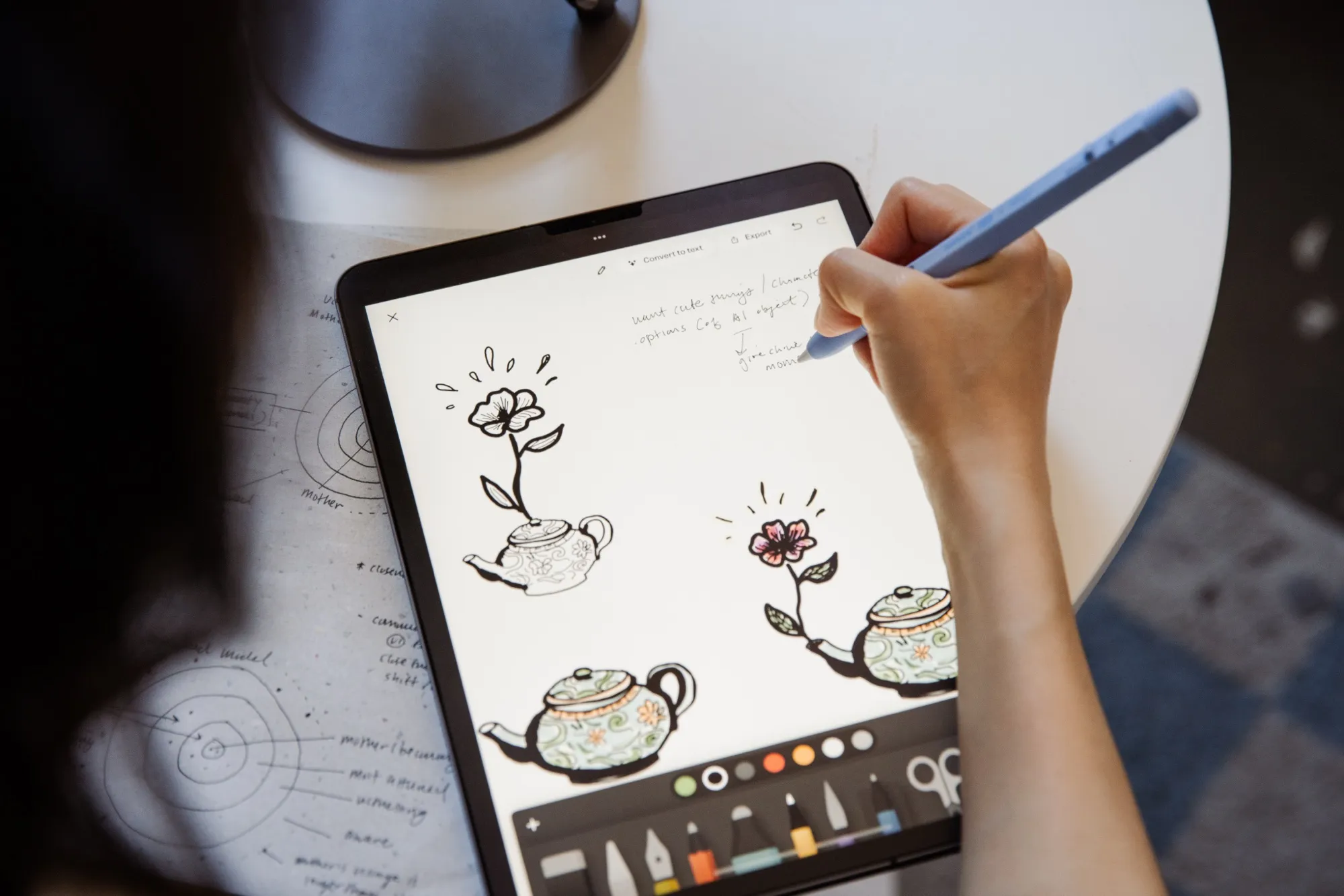
Diane worked with new mothers and a postpartum doula to design for the gap between wanting to help and knowing how. Pumbit is built on considerate design and culturally resonant gestures — small, tender acts of care a mother’s village can send, so support arrives without her having to ask for it.
- Needfinding with mothers and a postpartum doula
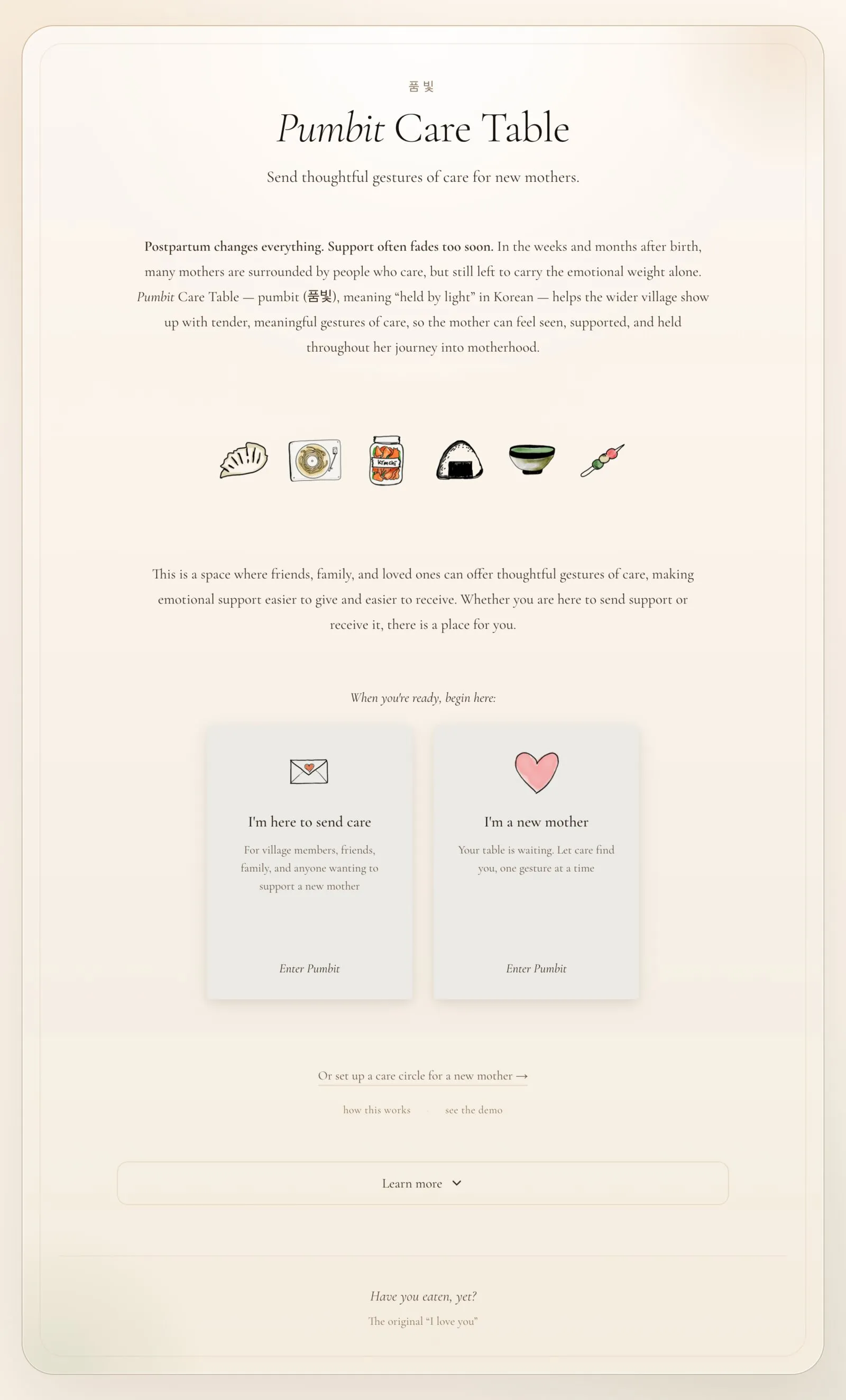
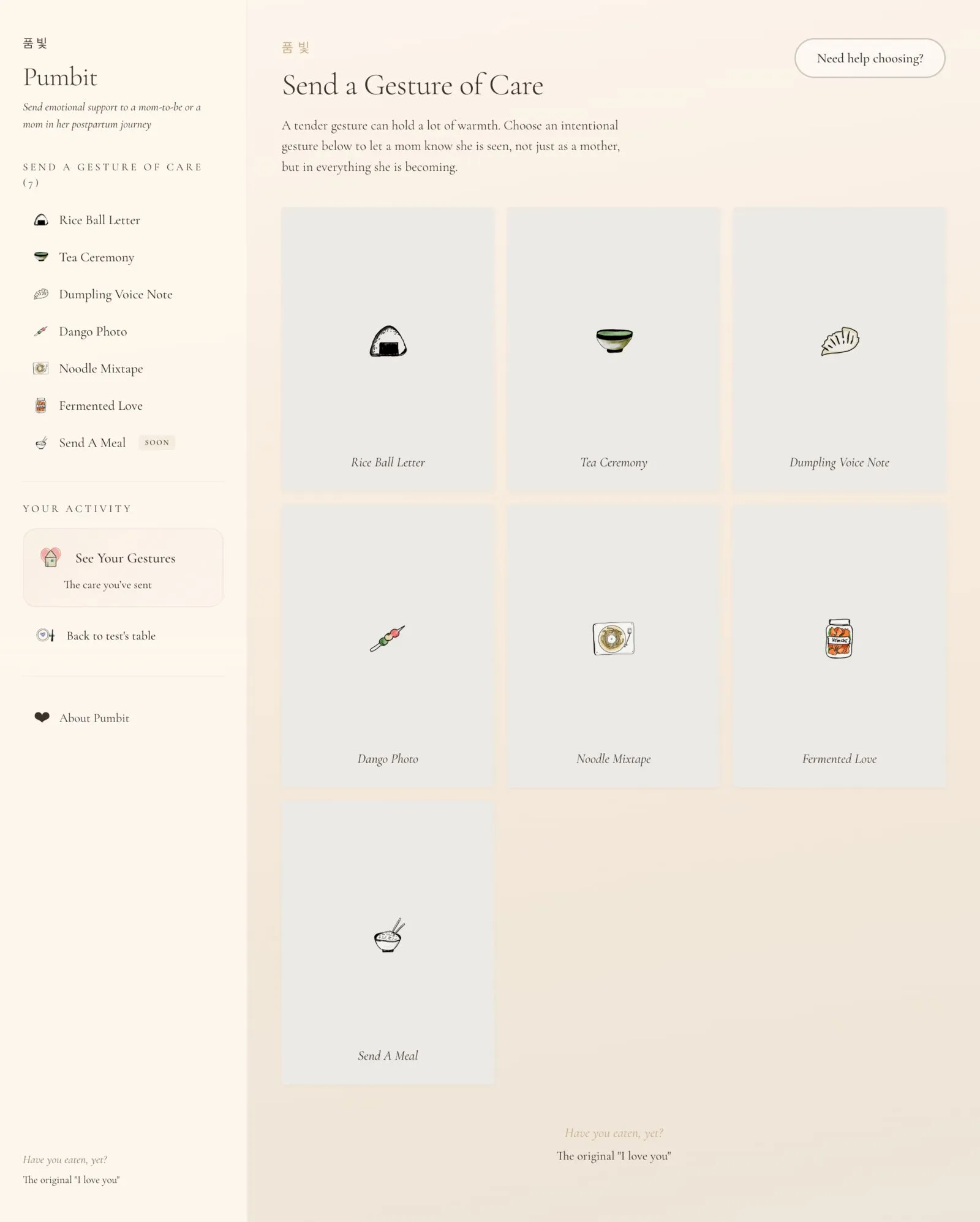
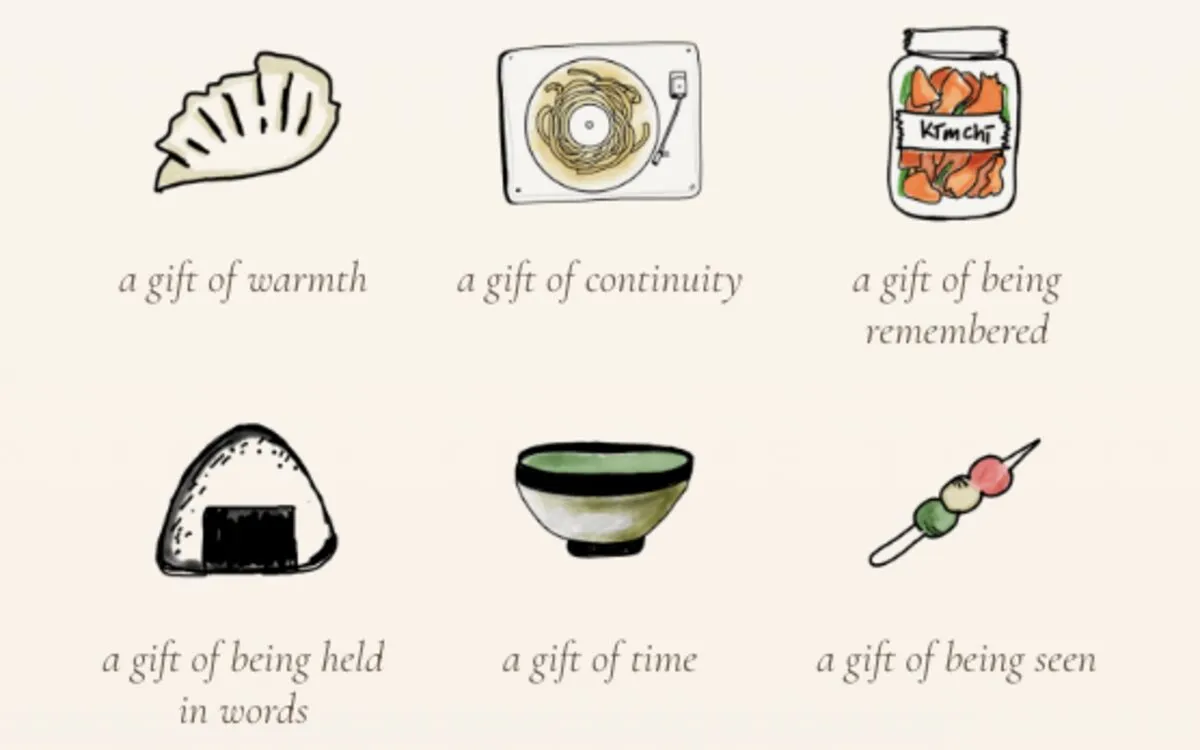
- Culturally grounded “gestures of care,” many of them food-based
- An AI layer that keeps care going when human attention fades
The artifact
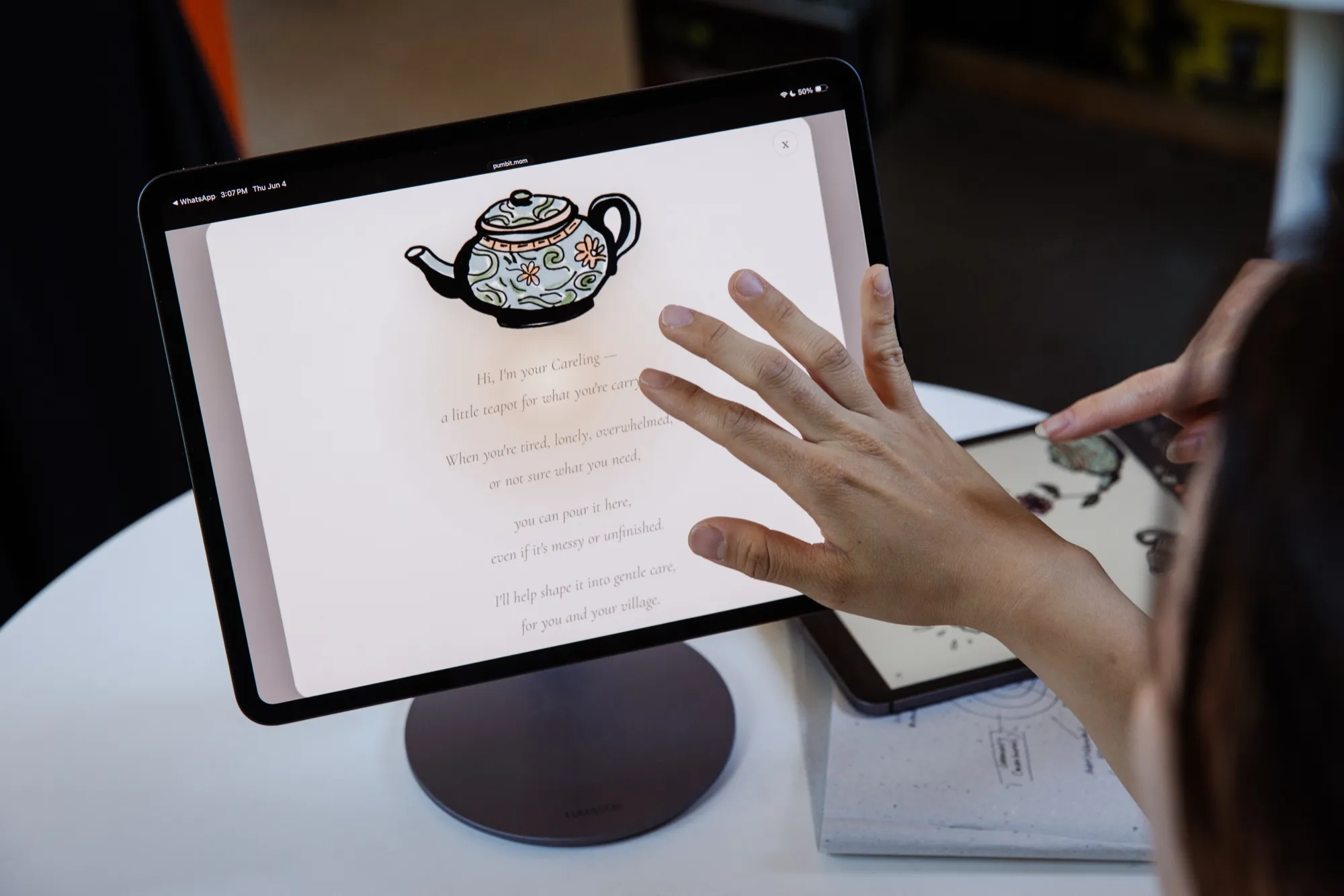
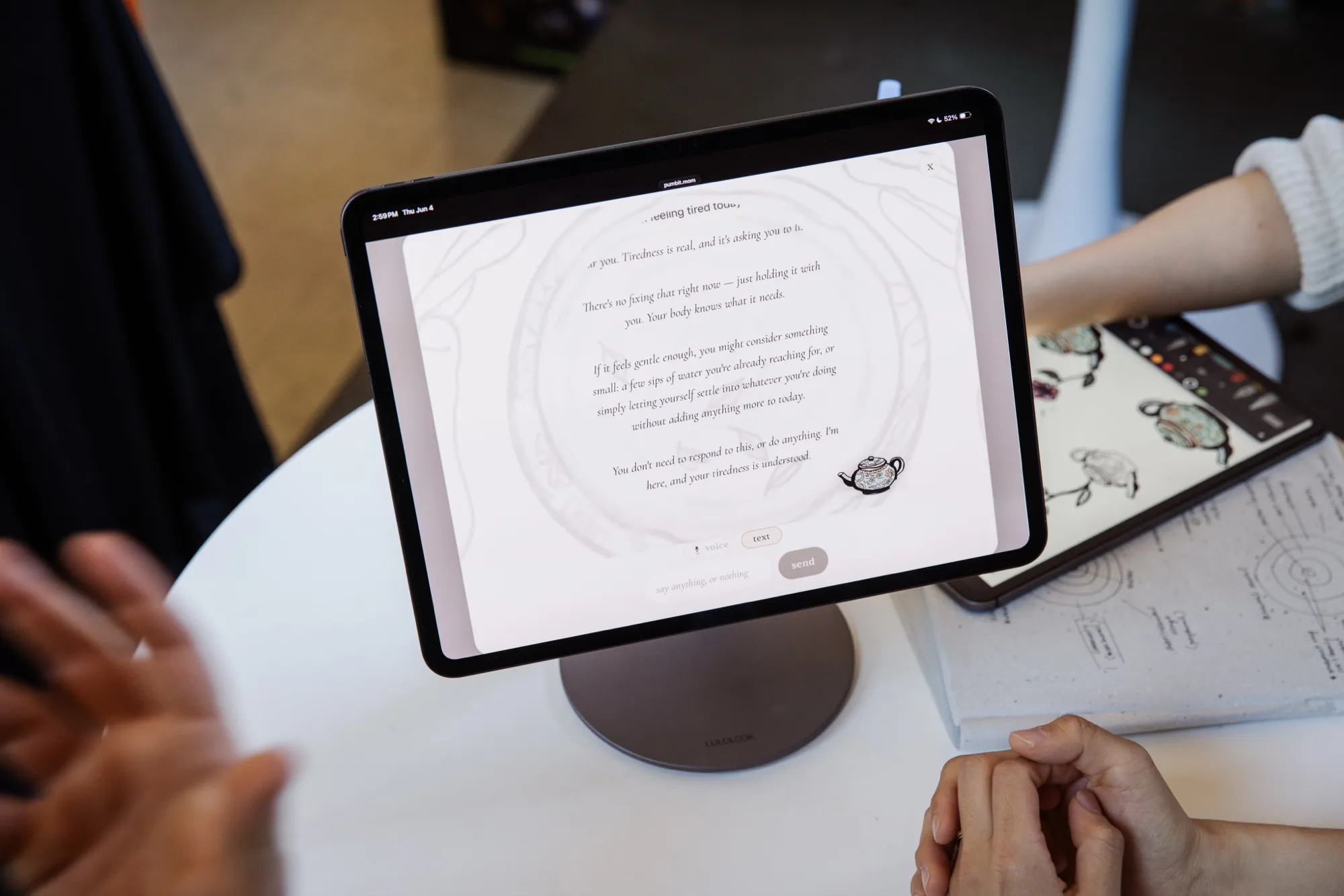
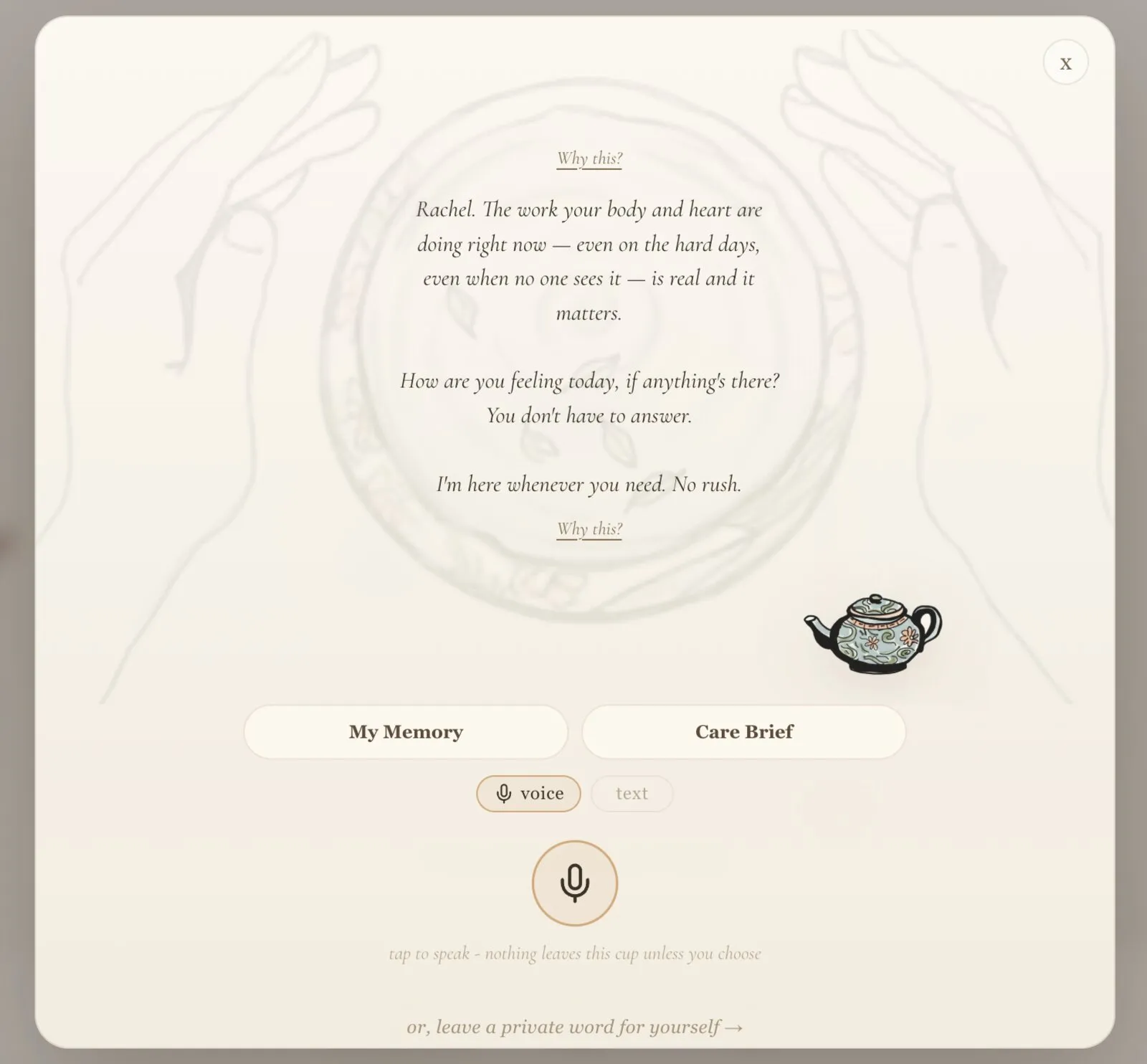
The working prototype gives a mother’s people six ways to show up — a rice-ball letter, a tea ceremony, a shared photo — and adds Careling, an AI companion that holds continuity and attunement between human moments. It’s being tested with mothers now.
Why it matters
Pumbit reframes postpartum support from a request the mother has to make into a system that moves toward her — turning scattered good intentions into care that actually lands.
“If I had this during the first month of postpartum, I would've actually cried.”
Korean-American mother, in testing