 Dabble
Optimized for Itself
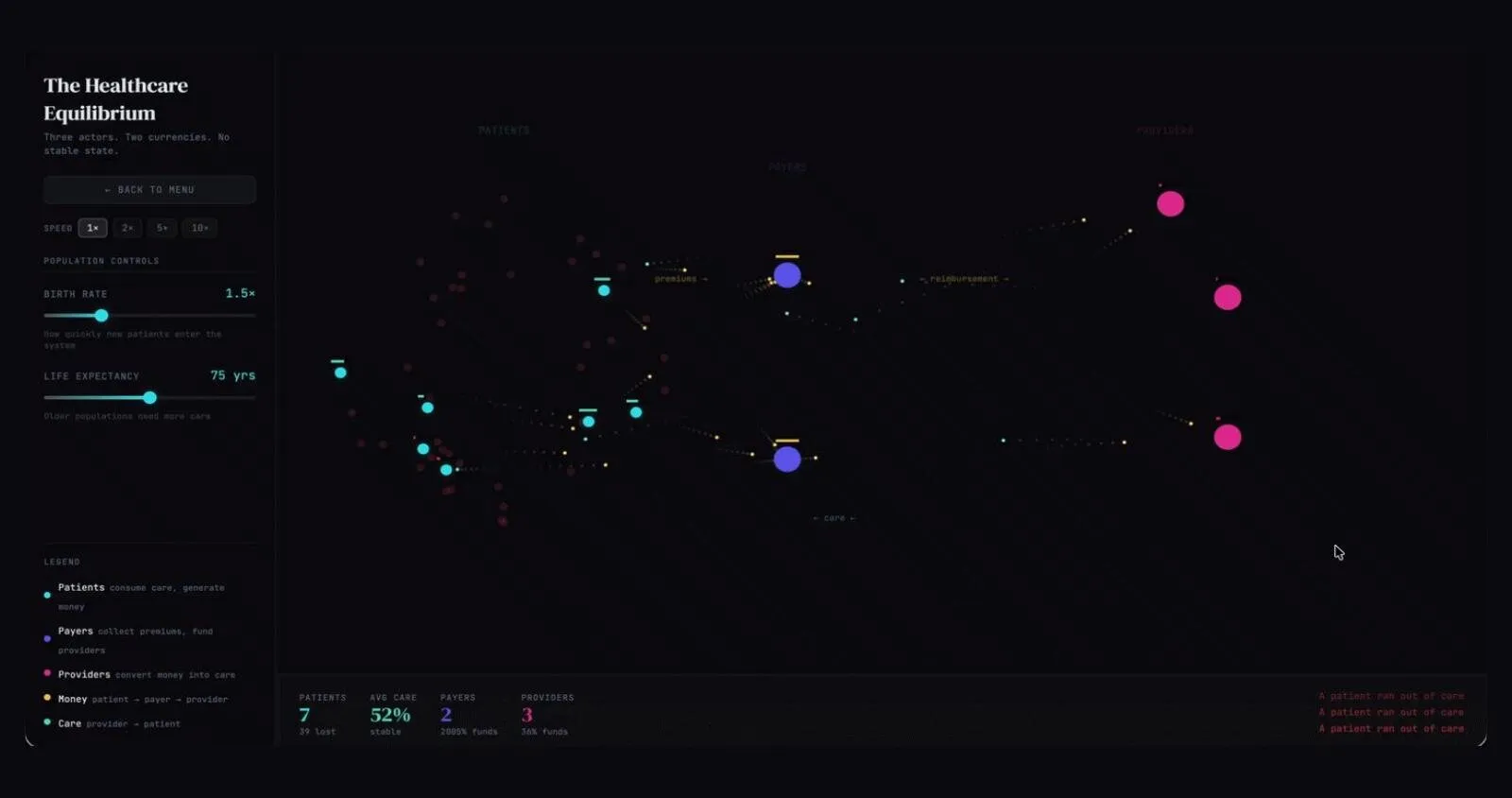
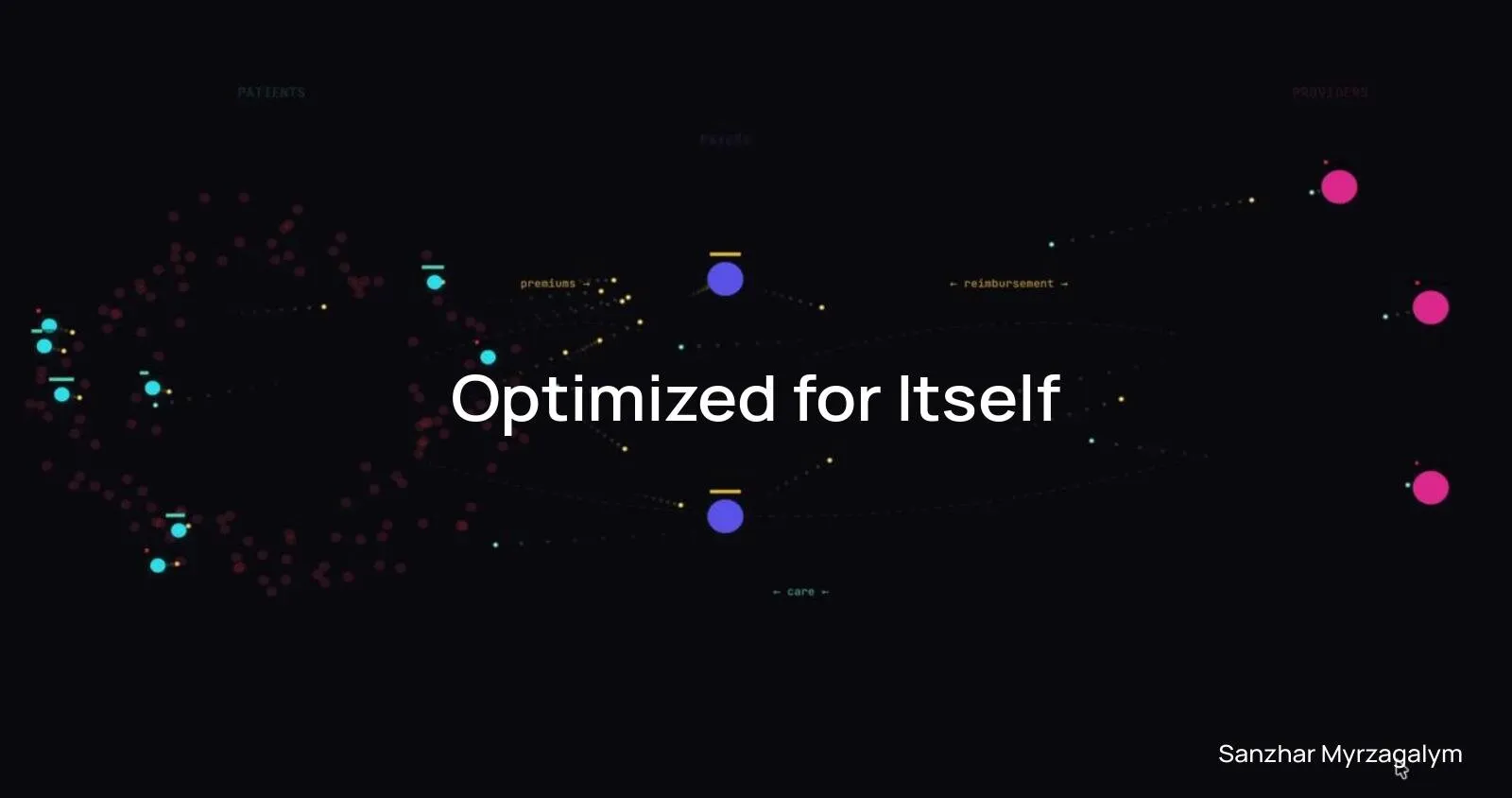
An agent-based simulation that makes the US healthcare system visible as a self-maintaining machine — and testable.

The need
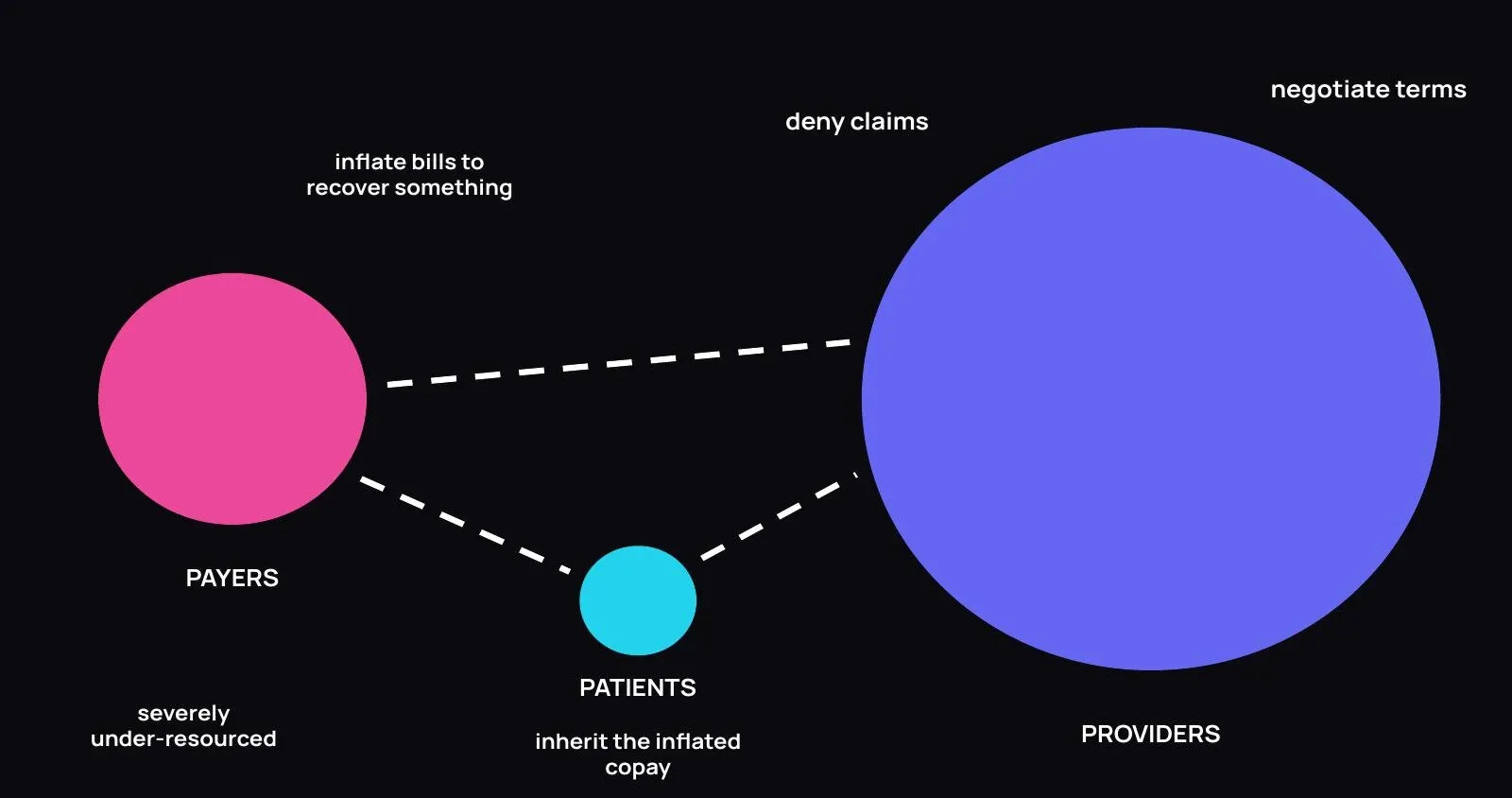
Everyone inside the U.S. healthcare system can feel that it’s broken — but no one can see how the pieces move together, or what would actually happen if you changed one rule. Without that picture, reform is guesswork, and the system keeps optimizing for its own continuation.
The approach
Sanzhar treated the system as something to be modeled and stress-tested. Drawing on roughly 40 stakeholder interviews and real claims data, he built it as three overlapping economies — patients, providers, and payers — each acting on its own incentives.
- ~40 interviews across patients, providers, and payers
- Agent-based modeling calibrated to claims data
- Policy stress-testing: change a rule, watch the system respond
The artifact
A working simulation with adjustable parameters — fee schedules, prior authorization, deductibles, network design — that reveals both what the system is and what a change would do. It’s been piloted with a hospital CFO, a revenue-cycle director, and payer and policy stakeholders, who used it to see their own institutions differently.
Why it matters
When a system is made visible, it becomes arguable — and changeable. Optimized for Itself turns a felt dysfunction into a model people can point at, test against, and reason about together.
“I have looked at our P&L for fifteen years and never saw what you just showed me.”
Hospital CFO, in a pilot session